
Peptide Therapies
What Peptides Do
The sudden popularity of peptides was fueled by the success of the peptide GLP-1 medications, semaglutide, and tirzepatide. Studies show that these medications can produce significant weight loss, control blood sugar, reduce cardiovascular risk, and even decrease the risk of some cancers. The success of those drugs sparked interest in other peptides and their potential benefits.
Peptides are short chains of amino acids produced in the body that serve as messengers, giving your cells specific orders. Insulin is an example of one peptide. So are the peptides that regulate appetite, tissue repair, metabolism, inflammation, and immune function.
As you age, your peptide production slowly decreases. Growth hormone-releasing hormones drop after the age of 30, leading to increased body fat, decreased muscle mass, poorer quality sleep and slower healing. Thymic peptide levels drop, causing a decrease in protective immune functions, and lower levels of peptides that protect the gut lead to poorer digestion.
Peptide therapy means using a specific peptide to amplify a message that’s already part of your physiology, to keep your cells optimally functioning.
Depending on the peptide selected, therapy may support areas such as body composition, energy, recovery, sleep quality, muscle preservation, cognitive performance, inflammation modulation, skin health, and healthy aging.
Aging weakens the signalling function but peptide therapy can restore the network to youthful levels.

What Does The Evidence Say?
Much of the marketing for peptide therapy is exaggerated and misleading.
In general, the evidence for most currently available peptides for wellness goals is promising, but only a few, like semaglutide for example, have gone through the expensive testing required to get FDA-approval.
The majority of peptides discussed in the wellness category are in a gray zone. The animal research findings are promising and the mechanisms credible, but it’s too early to draw conclusions from the early human trials currently being performed. There is also a lot of variabililty in response between individuals, making it difficult to predict the results each person can expect.
That means that therapy with peptides that are not yet approved by the FDA may offer promising results but they are not considered proven therapies yet. Be skeptical of marketing that guarantees outcomes or dramatic results. Reputable medical practices won’t.
Skinspirations recommends that someone interested in peptides consult with a physician with experience interpreting the most current clinical studies and their results, who will recommend an individual treatment plan only after a comprehensive assessment.
Potential Benefits Of Specific Peptides
The common thread: peptides make the most sense as a considered addition for someone who already has the fundamentals handled.
Semaglutide: Significant weight loss, appetite suppression, improved insulin sensitivity, reduced cardiovascular risk, improved metabolism
GHK-Cu: May stimulate collagen and elastin production, improve skin quality, reduce fine lines, enhance wound healing, promote hair growth, reduce inflammation
BPC-157: May support tendon, ligament, muscle, and gastrointestinal healing; may reduce inflammation; may accelerate recovery after injury
TB500: May promote tendon and muscle healing, wound repair, flexibility, recovery following orthopedic injuries
CJC-1295: May increase endogenous growth hormone and IGF-1, improve recovery, lean muscle mass, body composition, sleep quality, exercise performance
Sermorelin: May restore more youthful pulsatile growth hormone secretion, improve sleep, increase lean body mass, reduce fat mass, improve energy and recovery
Semax: May improve attention, memory, mental focus, cognitive performance, stress resilience, and recovery after neurologic injury; investigated for stroke rehabilitation
FAQS
What are peptides and how do they work?
Peptides are short chains of 2 to 50 amino acids that act as signaling molecules. They bind to specific receptors on cells to trigger biological responses like tissue repair, hormone release, or immune activation.
Where are peptides produced?
All of the raw materials used to produce peptides in the US are sourced from China.
How long do peptides take to work?
Effects vary by peptide. BPC-157 may show healing benefits within 1-2 weeks. Growth hormone peptides typically require 4-8 weeks for noticeable body composition changes. Blood biomarkers may shift within 30 days.
Are peptides safe?
Most therapeutic peptides have good safety profiles in research but long-term human data so far is limited for some of the available peptides.
How do I know if peptides are working?
Most peptide therapy effects like better energy, decreased recovery times, and improved sleep become noticeable within several weeks of starting treatment, although other effects can take up to several months to become apparent.
Peptides that decrease inflammation or increase growth hormone can be measured by following biomarkers in the blood.
Safety & Side Effects
Over 80 peptides have achieved global regulatory approval. Most therapeutic peptides have good safety profiles in research and human data is growing daily.
As with all medications, side effects or adverse reactions are possible. The most common side effects are usually mild and include:
Injection site bruising, redness, or swelling
Temporary water retention, especially in the first two weeks
Headaches, especially with higher doses
Fatigue
Nausea, constipation, or diarrhea, especially with GLP-1 drugs like semaglutide
Flushing
Serious side effects from hormone imbalances or immune conditions may occur if excessive doses are used. People with liver or kidney disease, or a history of cancer, should consult a specialist before considering peptide therapy.
Always work with a knowledgeable provider, start with low doses, and monitor your biomarkers.
If you’re interested in learning if you’re a good candidate for peptide therapy, schedule a complimentary consultation now.
Who Should Not Consider Peptide Therapy?
· Anyone who wants to buy peptides without continuing medical supervision.
Anyone hoping for a guaranteed, dramatic result.
· Anyone who is pregnant, breastfeeding, or has an active cancer diagnosis.
· Anyone with a significant underlying medical condition that hasn't been evaluated by their doctor.
· Anyone who wants to start peptides without a prior medical evaluation.
Peptide Therapies Available at Skinspirations
GLP-1 peptides semaglutide and tirzepatide. Weight loss, blood sugar and blood pressure control.
GHK-Cu. Skin rejuvenation, wound healing, hair growth, anti-inflammatory, antioxidant
BPC-157. Gut healing and tissue repair. Accelerates recovery from injuries to tendons, ligaments, and muscles.
BPC-157 and TB-500. Localized tissue repair (BPC-157) and systemic healing support (TB-500) for optimal recovery from injuries or chronic conditions.
NAD+. Fatigue, cognitive performance, and healthy aging
Ipamorelin. Growth hormone releaser. Stimulates natural GH production for body composition and recovery.
CJC-1295. Growth hormone (GH) support. Often combined with ipamorelin for sustained GH release.
Peptide Membership Programs
Medically Guided Peptide Therapy - Pricing And Membership Tiers

Vitality
A focused approach to peptide therapy
For patients beginning peptide therapy or addressing one primary health goal.
Includes:
$200 monthly treatment credit
May be applied toward peptide therapy or other services
One personalized peptide therapy plan
Initial clinician consultation
Annual clinical reevaluation
Medication and treatment guidance
Monthly Fee: $249/mo

Private Reserve
(Most Popular)
A more comprehensive approach to personalized peptide therapy
For patients who want to address multiple goals with ongoing physician oversight.
Includes:
$325 monthly treatment credit
May be applied toward peptide therapy or other services
Management of up to 2 peptide therapies when clinically appropriate
Two clinical reevaluations annually
Ongoing treatment adjustments
Monthly Fee: $449/mo

Pinnacle
Our highest level of personalized care
For patients seeking comprehensive physician-guided optimization with the highest level of access.
Includes:
$550 monthly treatment credit
May be applied toward peptide therapy or other services
Comprehensive personalized peptide management
Quarterly clinical reevaluations
Direct clinician messaging
Treatment adjustments between visits when clinically appropriate
Monthly Fee: $699/mo
How Your Peptide Membership Credit Works
Your Peptide Selection Is Less Cost than Your Monthly Credit
The remaining credit can be applied to another non-discounted services scheduled within the same month.
Your Peptide Selection Is Equal to Your Monthly Credit
Fully covered - no additional charge.
Your Peptide Selection Is More Cost than Your Monthly Credit
You pay only the difference at checkout. Example: If you’re in the Vitality tier ($200 credit) and want to get ipamorelin ($215), you pay $65.
Peptide Menu (Member Pricing)
Apply your monthly credit toward any peptide below. Pricing subject to change.
GHK-Cu
Effects: Firms and smooths skin, speeds healing.
Member price per month: $130
NAD+
Effects: Enhances metabolism, combats fatigue, repairs DNA.
Member price per month: $280
Semax
Effects: Supports memory, focus, and clarity
Member price per month: $195
BPC-157
Effects: Speeds healing and helps protect the gut
Member price per month: $130
BPC-157 & TB-500
Effects: Speeds tissue and gut repair, reduces inflammation
Member price per month: $280
CJC-1295
Effects: Increases lean muscle, decreases fat, speeds recovery, improves sleep.
Member price per month: $280
Getting Started
Before starting peptide therapy, an initial consultation to review your medical history, medications, and goals is done. Not everyone is a candidate for every peptide and depending on the therapy, lab tests may be required.
Our clinician will provide you with a customized plan, medication, and all necessary supplies for up to three months, depending on the peptide.
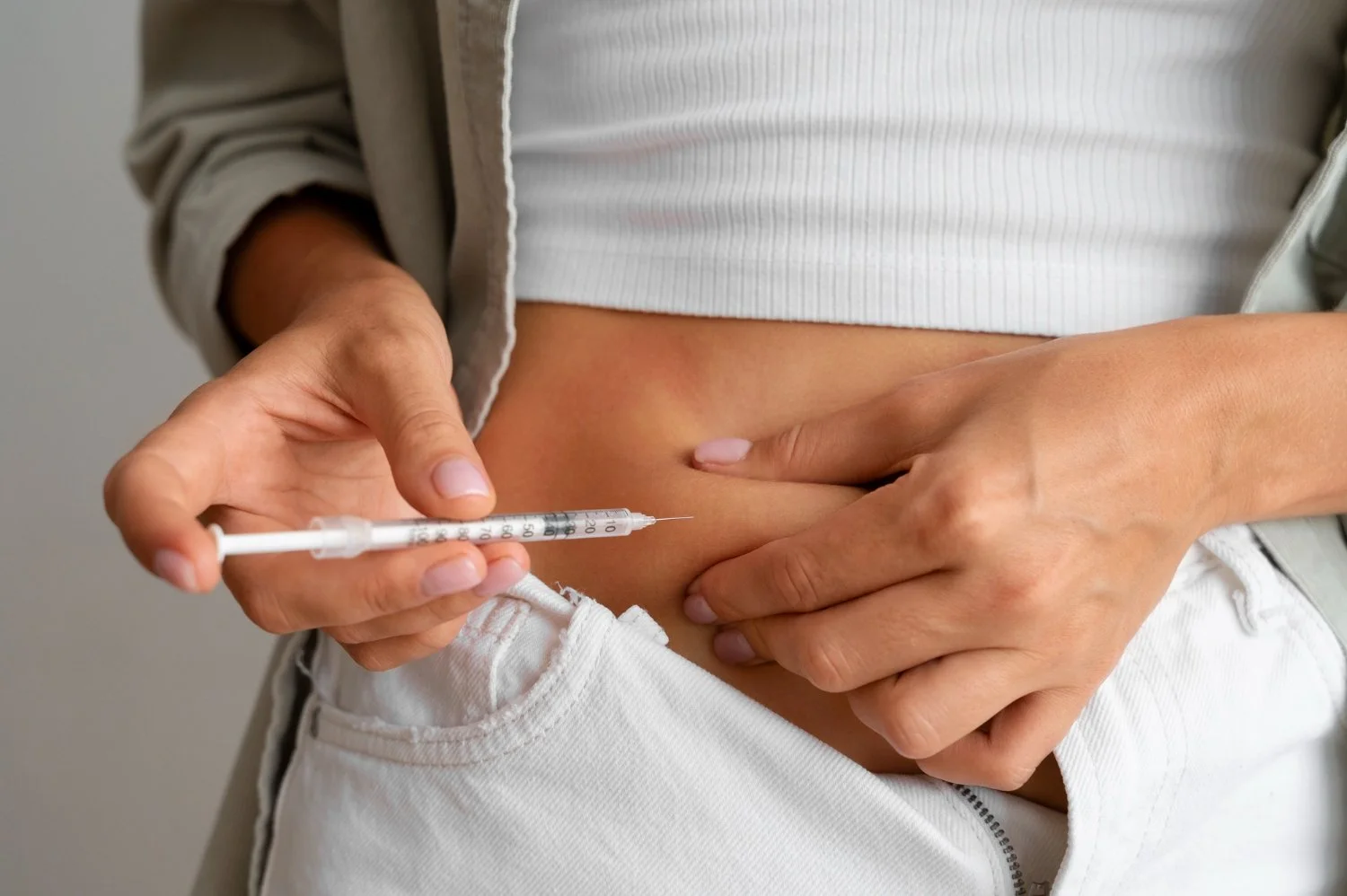
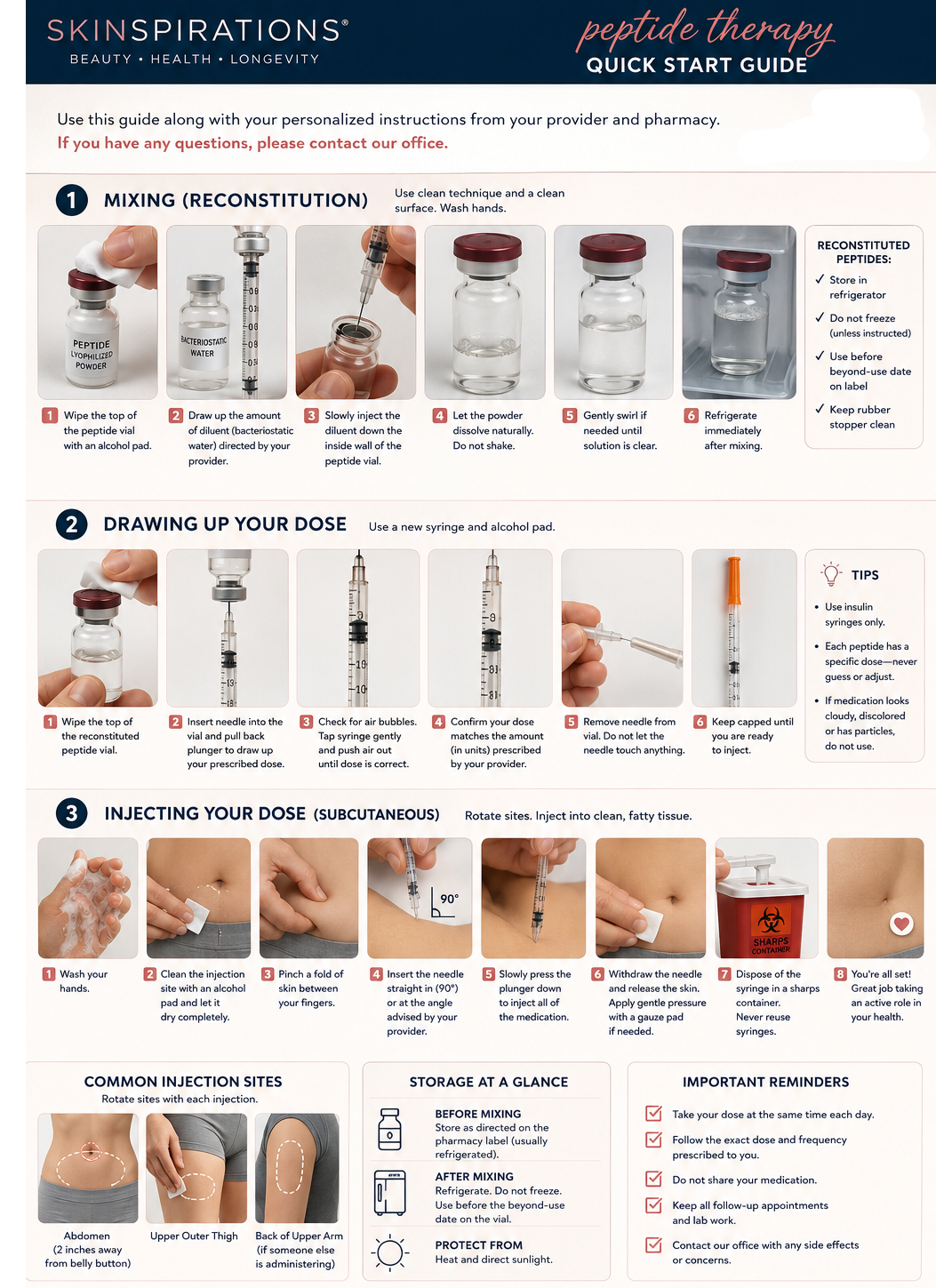
Most of our peptides are administered at home by injecting them through a tiny needle under the skin of your abdomen. We’ll show you how to do this and it’s easier than you think.
*Membership Terms and Conditions
Below, locate the skINSIDERS Concierge Membership terms and conditions summary, details, and agreement.
-
skINSIDER Concierge Membership has no initiation fees.
An initial six-month commitment is required after which the membership automatically renews monthly until canceled.
Your membership fees are deducted on the 15th of each month and the credit will appear in your Skinsider wallet within the following two business days.
You may use your membership balance for any of our services.
Member-only discounts may not be combined with any other discounts or promotions.
Memberships may not be purchased with patient financing plans.
-
All membership terms are on a six month basis and your credit card will automatically be charged the monthly fee on the 15th of each month. Monthly membership payments may be rolled over or “banked” on account and must be used within a rolling 12-month period. Patient financing programs may not be used for membership payments. Membership pricing, promotions and offers are non-transferrable and are for the member’s use only. A no-show fee of $50 may be subtracted for any cancellations less than 24 hours before a scheduled treatment.
You may cancel the membership after six months by giving a 30 day written notice. Please email our Patient Coordinator at info@skinspirations.com with your cancellation notice.
If you cancel before six months your balance will be applied to cover any discounts received.
Promotional vendor programs such as Allé, Aspire Rewards, and Evolus, may be used in conjunction with member discounts. For example, if you purchase Botox, you may use your Allé points/coupon and also get the member rate. Membership discounts may not be combined with any other specials or promotions.
-
By purchasing this membership, I hereby authorize my credit card lender to allow payments to be drawn from my provided account by Skinspirations. All payments due hereunder will be collected by Electronic Funds Transfer (“EFT”) and charged to the valid debit or credit card provided by me upon execution of this Agreement, which will be kept on file with Skinspirations.
I understand that I am responsible for ensuring that the provided debit or credit card on file remains active and maintains the proper funds/open balance to cover the costs of the monthly Membership fees. I agree that I will provide an updated payment method if my registered payment method is rendered unable to cover my membership fees for any reason. Should the debit or credit card initially provided upon execution of this Agreement be declined, I authorize Skinspirations to draw Membership fees from any other debit or credit card provided by me on file. Failure to maintain a valid method of payment with Skinspirations will constitute a default of this Agreement.
If EFT payment is declined or not honored for any monthly Membership charge, then Skinspirations reserves the right to accelerate the unpaid Membership dues and demand payment in full for all pending monthly charges remaining in the Agreement term. A minimum charge of either $20.00 or if a lesser amount is required by state law, the maximum allowed by state law, will be added for all failed payments; this charge is subject to change at Skinspirations’ discretion.
Any membership payment that is declined for insufficient funds, incorrect card information (such as being expired etc) is considered overdue and due to Skinspirations. If a membership is considered past due, then membership services and discounts will not be available for use until any past due balance is paid up to and including the current month due.
If a membership is past due for more than 10 days, then a $50 re-instatement fee must be paid to Skinspirations to re-initiate the membership.
Membership payment cannot be offset by any in-office credit from patient’s account and must be paid by a Visa, MasterCard, American Express or Discover.
Patient financing such as with Care Credit or Cherry cannot be used as payment for any service or product purchases in the membership program (as well as monthly membership payment).
Members agree to abide by any and all Skinspirations policies.
Any and all membership fees are not refundable.
Please contact Skinspirations at (727) 571-1923 if you have any questions.
Are you a candidate for Peptide therapy?
Schedule a complimentary consultation with Dr. Elliott soon to find out if a peptide therapy is the best approach for you.
REQUEST A CONSULTATION
⭐️⭐️⭐️⭐️⭐️
“I'm so glad that I found Skinspirations! For every concern I've gone to them for, they have had the most advanced treatment options possible. The staff is always wonderful, and the knowledge of Dr. Elliott and the other clinicians is second to none.”
– Rodney Taylor